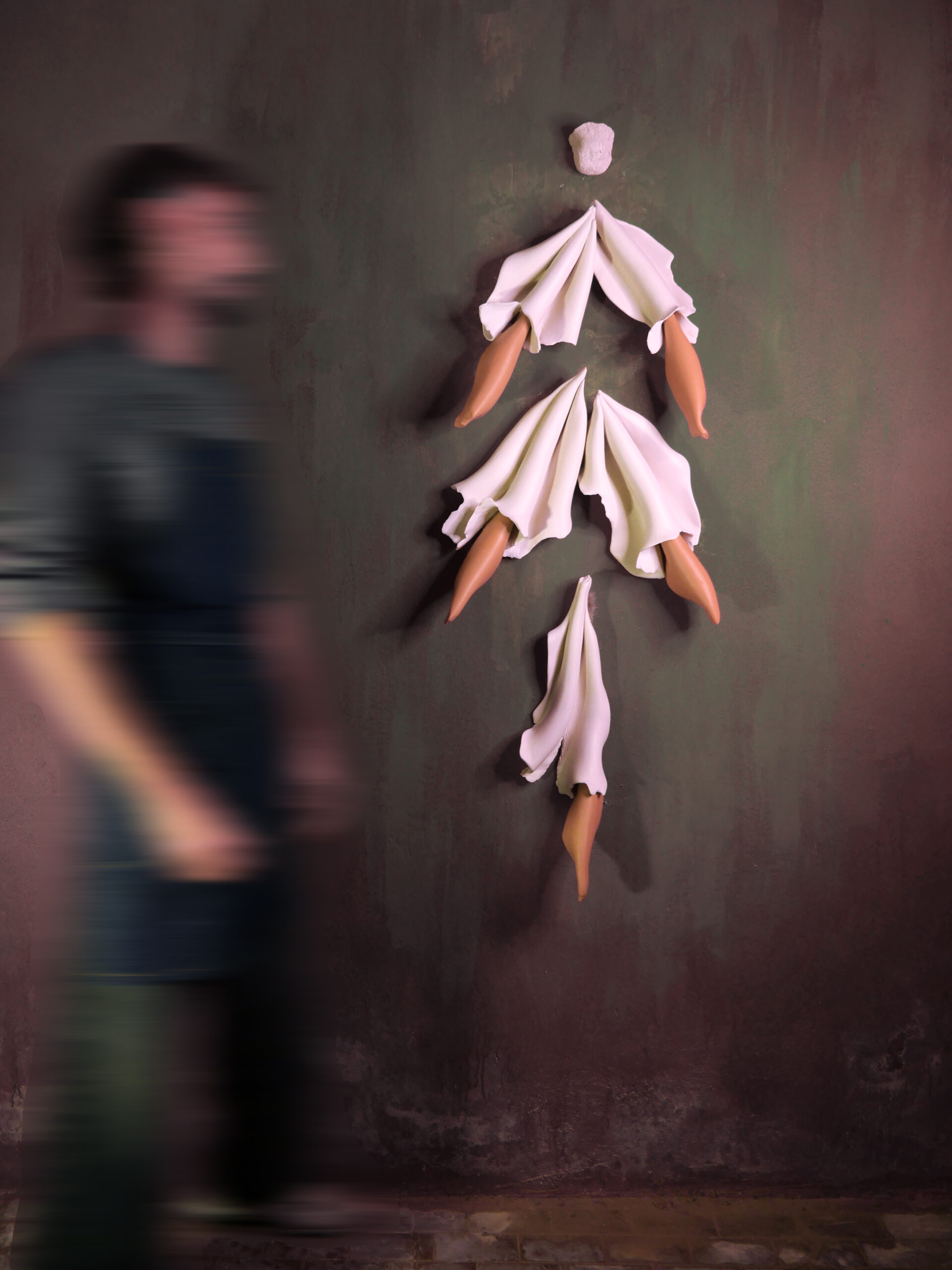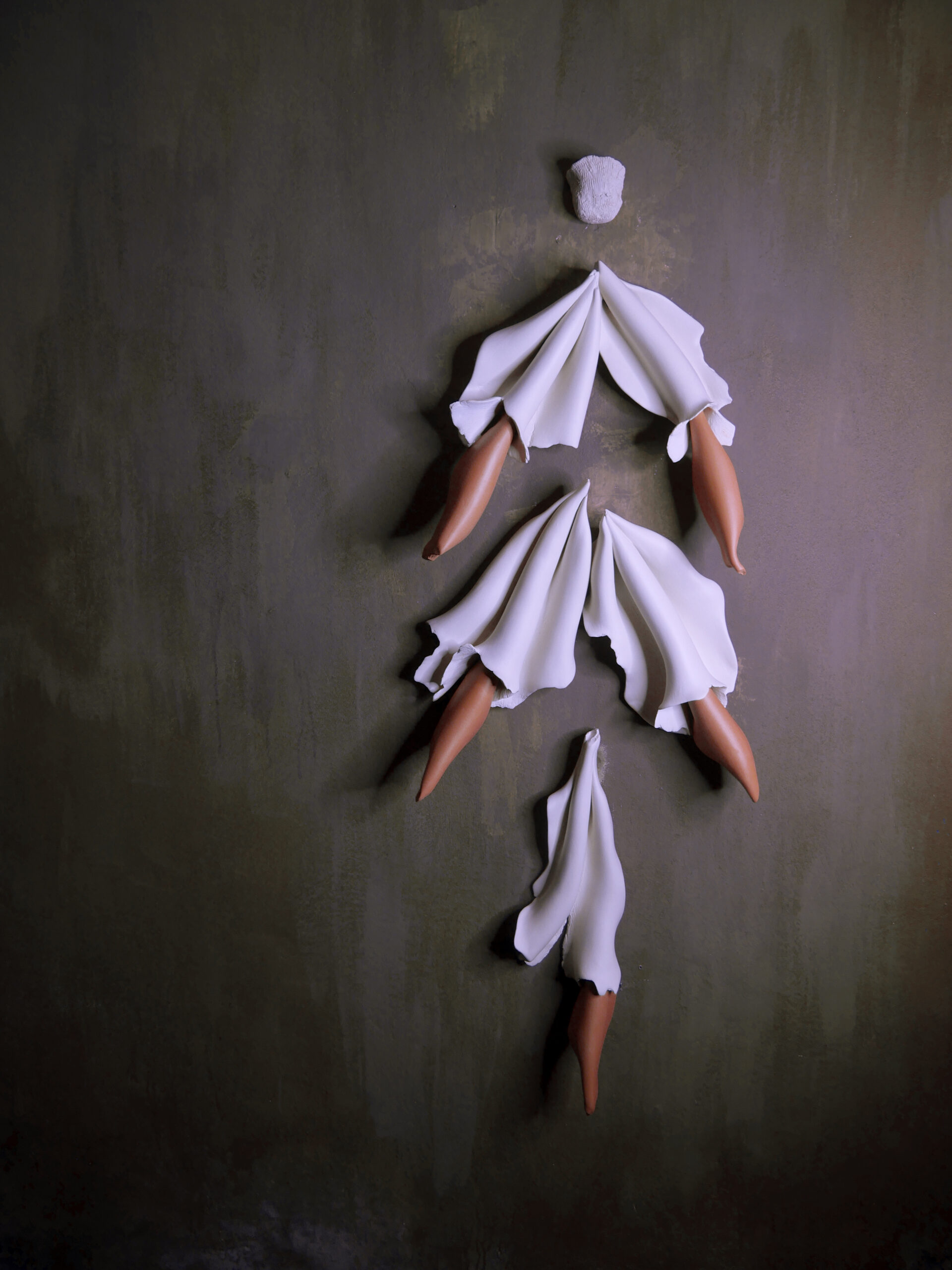
Formas de un dios bueno, 130 x 48 x 12 cm, Oscar Barbery, 2025
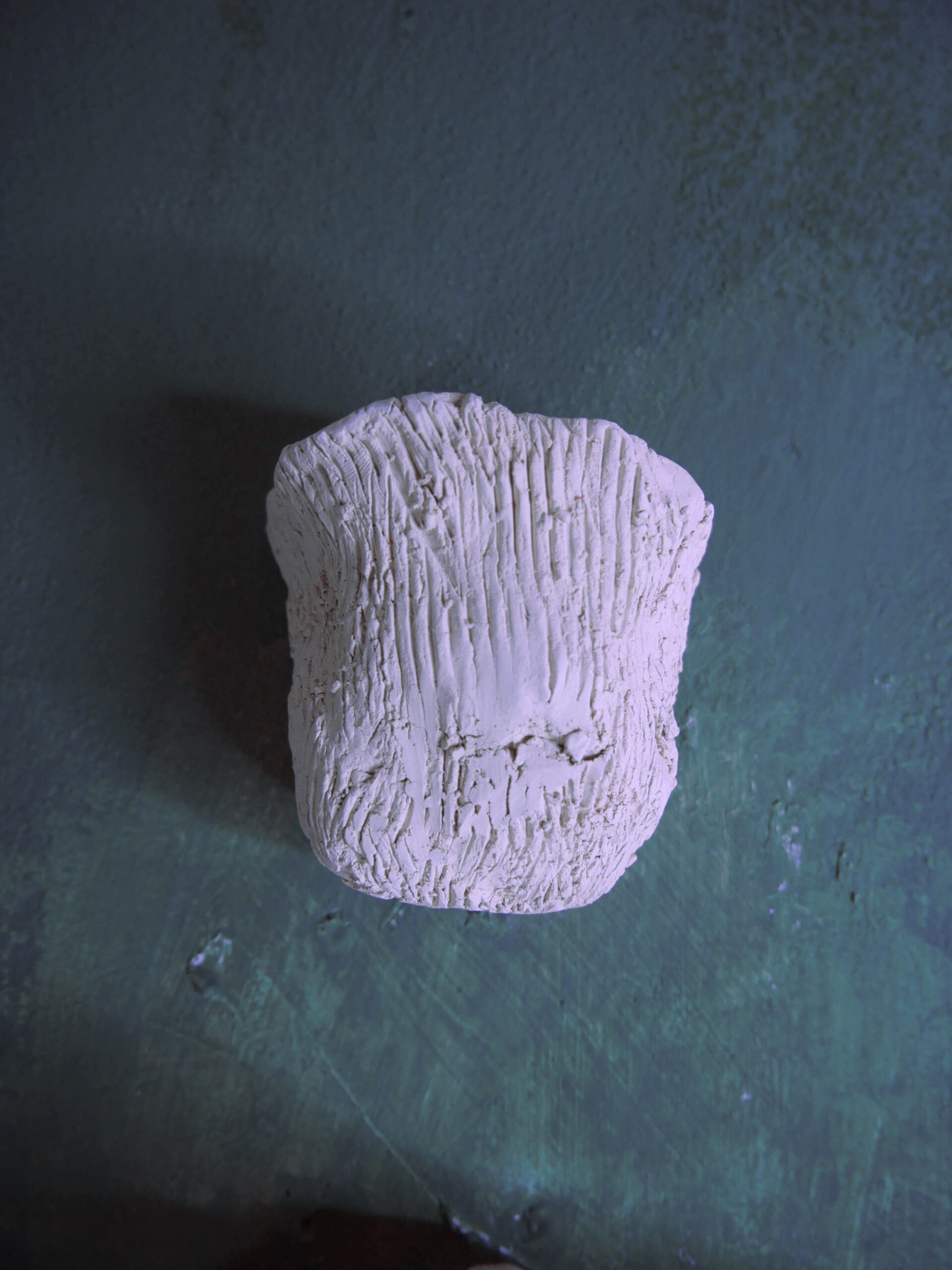
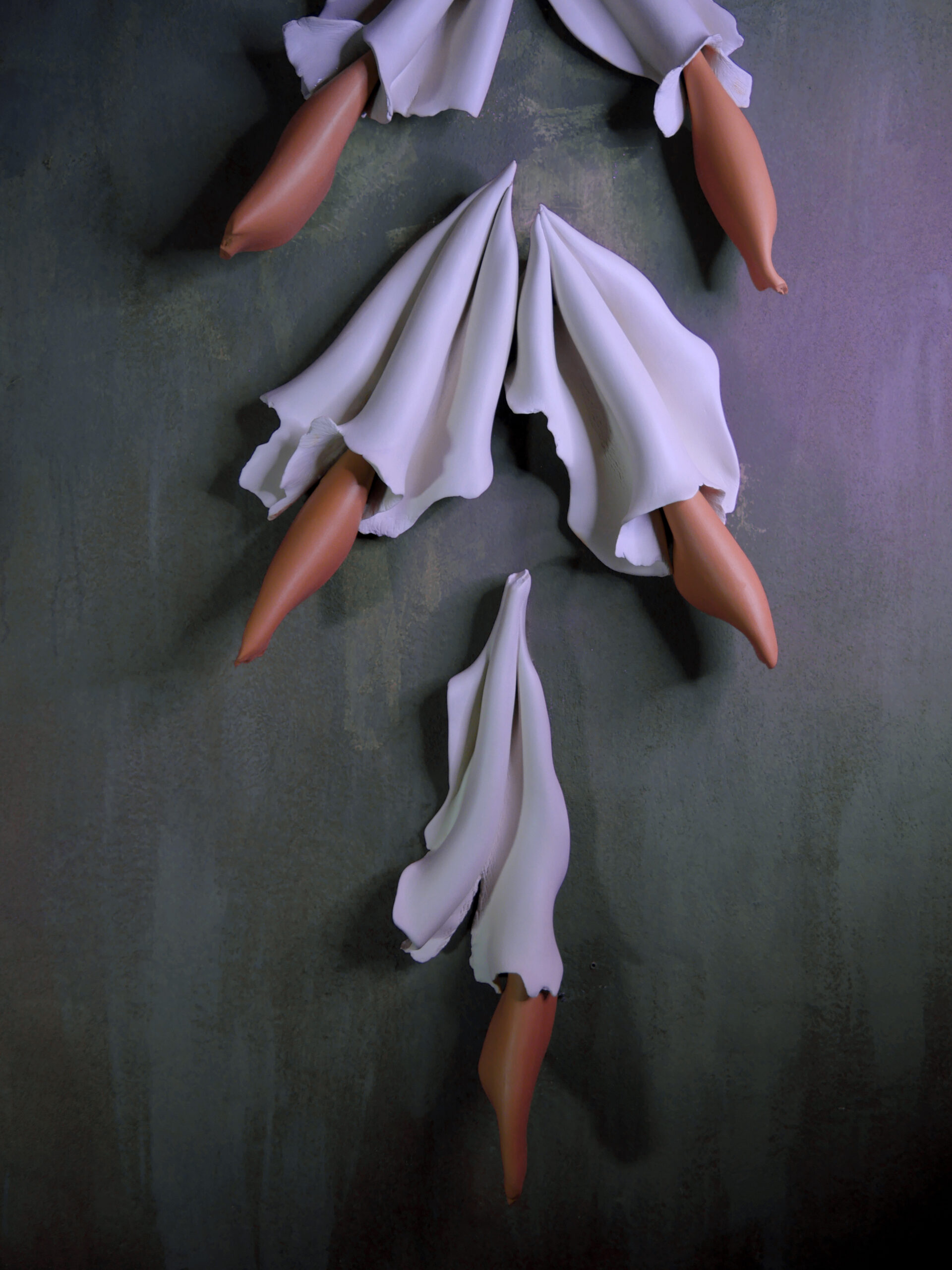
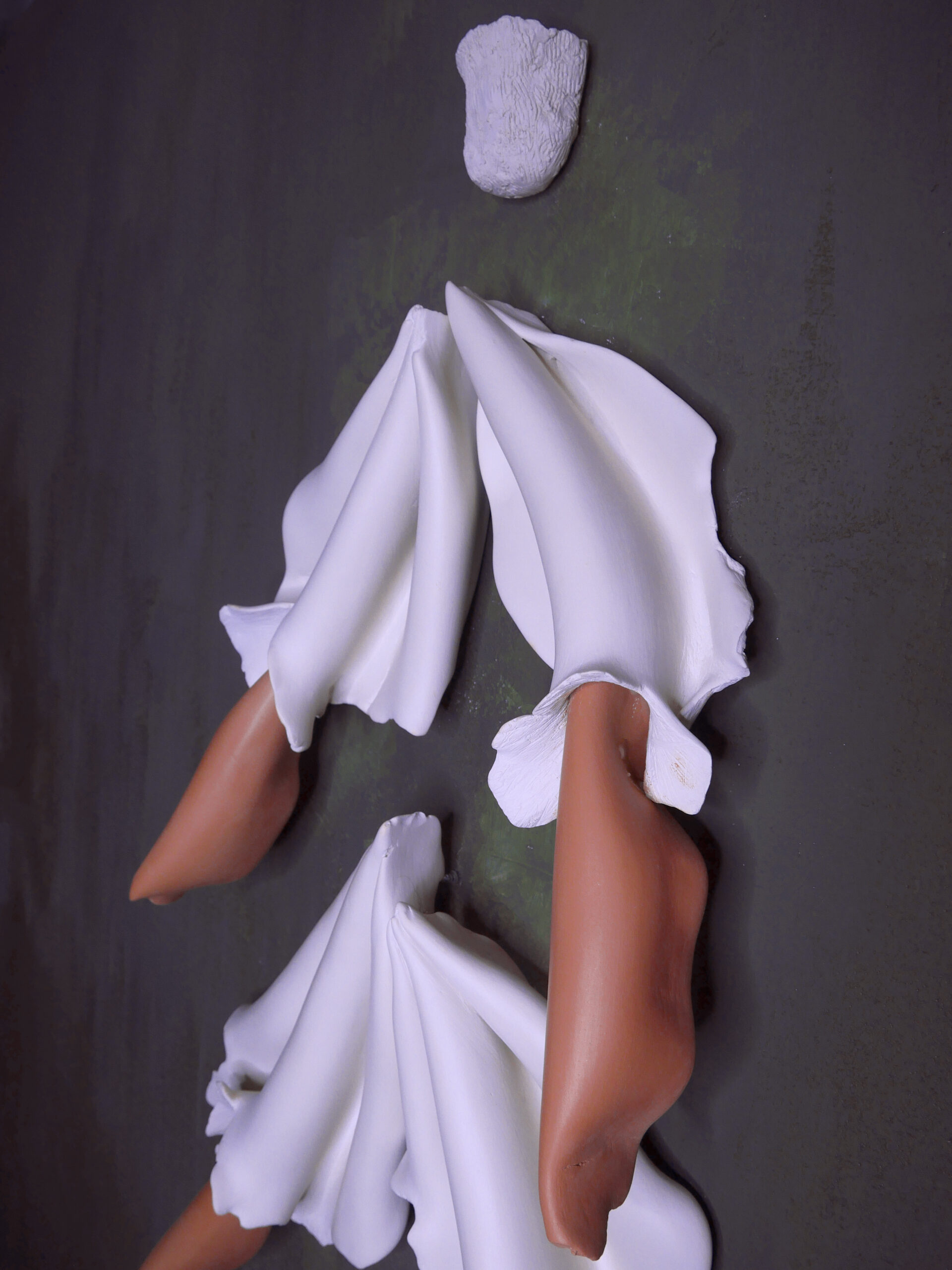
La instalación Formas de un dios bueno se compone de seis piezas cerámicas modeladas y bruñidas a mano, dispuestas en relación vertical sobre muro. El conjunto alterna superficies de terracota y arcilla blanca, estableciendo un diálogo visual entre contraste cromático, textura y forma.
Las piezas presentan morfologías abiertas y asimétricas que evocan estructuras orgánicas —vainas, pétalos, membranas— sin llegar a una representación literal. Su disposición enfatiza la idea de crecimiento y desplazamiento, generando un ritmo que sugiere tanto expansión como repliegue.
El trabajo forma parte de la serie Teología Vegetal, un proyecto que investiga las correspondencias entre materia, naturaleza y simbolismo espiritual. En este contexto, la obra se plantea como una reflexión sobre la noción de divinidad a partir de lo vegetal: no como figura trascendente, sino como principio vital que habita en los procesos materiales.
La cerámica se utiliza aquí no solo como soporte técnico, sino como campo de pensamiento matérico. A través del bruñido y del modelado manual, el artista pone en valor la relación directa entre cuerpo y materia, subrayando la dimensión procesual de la forma.
Sin recurrir a narrativas explícitas, Formas de un dios bueno propone una lectura contenida y materialista de lo sagrado: una divinidad entendida como energía generativa, inseparable de la tierra y de su poder transformador.
__
The installation Forms of a Good God consists of six ceramic pieces, hand-modeled and burnished, arranged in a vertical relationship upon the wall. The ensemble alternates between terracotta and white clay surfaces, establishing a visual dialogue through chromatic contrast, texture, and form.
The pieces present open and asymmetrical morphologies that evoke organic structures—pods, petals, membranes—without reaching a literal representation. Their arrangement emphasizes the idea of growth and displacement, generating a rhythm that suggests both expansion and withdrawal.
This work is part of the series Vegetal Theology, a project investigating the correspondences between matter, nature, and spiritual symbolism. In this context, the work is framed as a reflection on the notion of divinity through the vegetal: not as a transcendent figure, but as a vital principle inhabiting material processes.
Ceramics are used here not merely as a technical medium, but as a field of material thought. Through burnishing and manual modeling, the artist emphasizes the direct relationship between body and matter, underlining the processual dimension of form.
Without resorting to explicit narratives, Forms of a Good God proposes a contained and materialist reading of the sacred: a divinity understood as generative energy, inseparable from the earth and its transformative power.